
The Indian IT services sector is scrambling to retain talent since digitisation-led transformation has increased the demand for a digitally skilled workforce. As a result, the pull for jobs for tech professionals is also coming from non-IT sectors, leading to higher attrition among IT companies. The average number of tech jobs from non-IT sectors has seen a 41 per cent uptick in March-May'21 versus March-May'19, according to data from Naukri.com.

Tata Motors recently cut the sales forecast of its luxury car brand, JLR, due to chip shortages, scaling down its production numbers from the earlier 120,000 units to 60,000-65,000 units by September, and leading to an almost 10 per cent fall in the company's stock. In May this year, Bosch India, too, had stated that chip shortfalls would impact its production, as supply chains were getting disrupted.

'On an average we have been getting four to five such proposals a month, but we aren't pursuing them as they don't tick the boxes.'

A seasonally-strong quarter, with no immediate impact of the second wave and continued acceleration of digital transformation will allow the IT services sector to report a robust Q1 this financial year. However, key metrics to look out for will be attrition rate and margin lever as they will be impacted by salary hikes. Analysts expect growth for the quarter to be broad-based, with sectors like banking, financial services and insurance (BFSI), retail, manufacturing, hi-tech and life sciences driving revenue growth. Analysts across brokerage houses are pegging revenue growth in the range of 1.5 per cent to 4.5 per cent.

Nasper-backed fintech firm PayU has started talks to acquire domestic payment gateway major BillDesk, and the deal size could be in the range of $3-4 billion, sources in the know said. "BillDesk has been open to being acquired for some time now, but in the past the valuations that the company was seeking proved to be a hurdle," said a source. "Three years ago too, PayU had approached BillDesk for an acquisition, but things didn't go ahead due to high valuations. "BillDesk had asked for $2-billion value then," said the source.

Tata Motors has halved the volume outlook for its UK subsidiary Jaguar Land Rover Automotive (JLR) and warned of lower earnings as it sees the semiconductor shortage deepening in the September quarter of the current financial year, according to a notification issued by the company to the stock exchanges on Tuesday. The announcement caught investors unawares. They were hoping for a quicker recovery. Tata Motors' stock tanked 13 per cent (on July 6) from the day's high of Rs 358.10 and hit the lower circuit (Rs 311.45) in intra-day trades.

Since home-delivered meals from five-stars are cheaper by 15 to 20 per cent as compared to eating at the destination outside, food delivery has emerged as an important part of every restaurant's service portfolio.

Since its launch in April, helpline 155260 has been able to prevent more than Rs 18.5 million of defrauded money from reaching the hands of fraudsters.

Bug bounty hunters or independent ethical hackers are certified cybersecurity professionals or security researchers who crawl the web, scanning the systems for gaps through which hackers can sneak in and alert the companies, says Shivani Shinde.

Close to half a dozen more three-row premium mid-size models are expected to hit the road over the next two years.

'While most companies were bullish before the second wave of double-digit sales growth in FY22, that may not be the case now.'

'I have personally been very keen on investing in lithium ion battery technology for some time.'
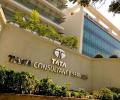
Tata Consultancy Services (TCS) has weathered the pandemic very well, and has earned tremendous goodwill from customers, which enhanced the firm's standing in the market, N Chandrasekaran, chairman, said in his virtual address of the 26th Annual General Meeting on Thursday. He said TCS shareholders received over 3,000 per cent return on their investments since the company was listed in 2004.

Auto sales, particularly of two-wheelers, may not bounce back immediately and may take another two months to come back on track even as car bookings have started seeing an initial uptick. Various states started Unlock 2.0 on Monday, following a fall in the number of Covid-19 cases. Auto sales were hit in May following the impact of Covid-led lockdowns.

One of the biggest lessons for cities fighting the Covid-19 pandemic has been the criticality of access to data. Mumbai, which has shown significant success in managing the second wave of the pandemic, is a case in point, reports Shivani Shinde.

The total value of India's top 100 brands has increased by 2 per cent, from $162.1 billion in 2020 to $164.9 billion in 2021, according to the latest Brand Finance India 100 2021 report. This uplift in brand value over the course of the first year of the pandemic is an impressive feat given the global economic crisis following the implementation of national lockdowns in March 2020, when business activity was brought to a halt, affecting both production and consumption. Among the brands that came on the top of the list include Tata Group, Reliance Industries, and Mahindra Group.

Digital payments provider Paytm is all set to make its market debut as early as this year, with an aim to raise $3 billion (around Rs 22,000 crore). If successful, this could be the biggest initial public offering (IPO) by an Indian company, breaking Coal India's 2010 record of Rs 15,475 crore. According to media reports, the board of One97, parent company of Paytm, is all set to meet this Friday to formally approve the IPO plan.

Banking technology start-up Zeta is the latest entrant to the unicorn club after raising $250 million in its Series C round from SoftBank Vision Fund 2. Sodexo participated as an additional minority investor in the round. Founded by serial entrepreneur and billionaire Bhavin Thurakia, the startup is now valued at $1.4 billion. It is the 14th company this year to cross the $1 billion valuation mark after Meesho, Cred, Pharmeasy, ShareChat, Moglix and others.

Shortages of chips will impact the car market

In 2020, after the outbreak of the Covid-19 pandemic, several five-star hotel chains commenced home delivery of food as a lot of people preferred to stay indoors. A year later, as the Covid situation worsens, such hotels are going the extra mile to cater for the gastronomical needs of their customers. With health, nutrition, and immunity occupying the mind spaces, these hotels are crafting menus that are not only high on health quotient, but also have food capable of improving the mood. The move, they hope, would help them get more customers as prices are also competitive.
 © 2026 Rediff.com - Investor Information - Advertise with us - Disclaimer - Privacy Policy - Sitemap - Feedback - About us - Terms of use - Grievances